
What Are Sinking Funds and How to Use Them to Plan for Big Expenses in Advance
You know that sinking feeling when a big expense hits and you have no idea how to pay for it? Car insurance is due, the holidays are around the corner, or your pet needs a vet visit, and suddenly your entire budget falls apart. If you have ever wondered what are sinking funds and how to use them, you are about to discover one of the most powerful tools for finally getting ahead of those predictable financial surprises.
Why Big Expenses Keep Derailing Your Budget
Here is the frustrating truth. Most people who budget only plan for their monthly bills. Rent, utilities, groceries, and maybe a debt payment. But life is full of expenses that do not show up every single month. They show up every few months, once a year, or at random intervals that feel impossible to predict.
Think about expenses like these:
- Annual car insurance or registration fees
- Holiday gifts and travel
- Back-to-school supplies for your kids
- Home repairs and maintenance
- Medical copays and dental work
- Vacation costs
- New tires or car repairs
These are not emergencies. They are predictable expenses that happen to most people every year. The problem is that when you do not plan for them, they feel like emergencies. They force you into credit card debt, blow up your monthly budget, or drain the emergency fund you worked so hard to build. If you are already working hard to budget while living paycheck to paycheck, these surprise costs can feel devastating.
That is exactly the problem sinking funds are designed to solve.
What Are Sinking Funds and How Do They Work?
A sinking fund is money you set aside a little at a time for a specific upcoming expense. Instead of scrambling when that expense arrives, you save for it gradually so the money is ready when you need it.
Think of it this way. If your car insurance costs $1,200 a year and you know it is due every December, you do not need to find $1,200 in December. You need to save $100 a month starting in January. When December rolls around, the money is already sitting there waiting for you.
That is the entire concept. Simple, right? But it is incredibly powerful because it transforms large, stressful bills into small, manageable monthly amounts that fit right into your budget.
Sinking Funds vs. Emergency Funds
People often confuse sinking funds with emergency funds, but they serve very different purposes. An emergency fund is for the truly unexpected, like a sudden job loss or an unplanned medical bill. If you are still building yours, check out this guide on how to build a 3-month emergency fund.
A sinking fund, on the other hand, is for expenses you know are coming. You may not know the exact amount, but you know they will happen. By using sinking funds for predictable costs, you protect your emergency fund for genuine emergencies. This keeps your entire financial system stronger.
Sinking Funds vs. Regular Savings
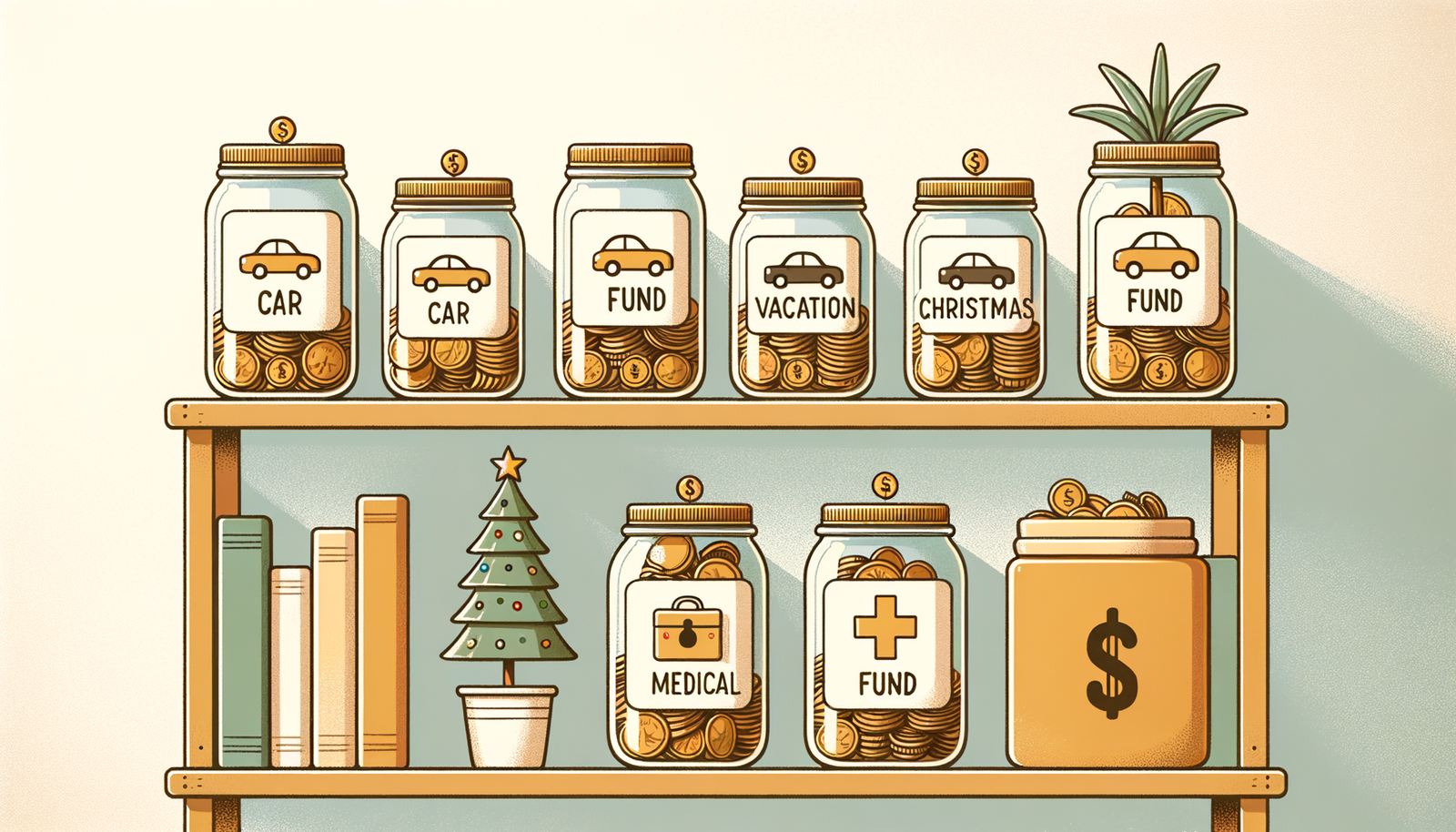
Regular savings is often a general pool of money without a clear purpose. Sinking funds are different because each one has a specific name and a specific goal. You might have a “Christmas fund,” a “car maintenance fund,” and a “medical expenses fund,” all separate from one another. This clarity is what makes sinking funds so effective. Every dollar has a job. If you like that idea, you might also enjoy learning about zero-based budgeting and giving every dollar a purpose.
How to Set Up Your Sinking Funds Step by Step
Getting started with sinking funds is straightforward. Here is exactly how to do it.
Step 1: List Your Irregular and Upcoming Expenses
Grab a piece of paper or open a spreadsheet and write down every expense you can think of that does not happen monthly. Look back through your bank statements from the past year if you need help remembering. Common categories include:
- Car insurance, registration, and maintenance
- Holiday and birthday gifts
- Annual subscriptions and memberships
- Home repairs and appliance replacement
- Vacation and travel
- Medical and dental expenses
- Clothing for yourself or your kids
- Pet care and vet bills
- Property taxes or HOA fees if paid quarterly or annually
Do not worry about getting a perfect list. You can always add or adjust categories later. The goal right now is awareness. If tracking past spending feels overwhelming, this post on how to track your spending without feeling overwhelmed can help simplify the process.
Step 2: Estimate the Cost and Set a Deadline
For each expense on your list, estimate how much it will cost and when you will need the money. Be realistic, and round up a little to give yourself a cushion. For example:
- Christmas gifts: $600, needed by December
- Car insurance: $900, due every six months in June and December
- Vacation: $1,500, planned for August
Step 3: Divide and Add to Your Monthly Budget
Now divide each total by the number of months you have until the expense is due. Using the examples above:
- Christmas gifts: $600 divided by 12 months = $50 per month
- Car insurance: $900 divided by 6 months = $150 per month
- Vacation: $1,500 divided by 8 months = roughly $188 per month
Add these amounts as line items in your monthly budget. They are just as important as rent or groceries. If you need a framework for organizing all of this, take a look at how to make a budget you will actually stick to.
Step 4: Keep the Money Separate and Labeled
This step is critical. If you dump all your sinking fund money into one checking account, you will spend it. You need a system to keep each fund separate and clearly labeled.
Here are a few practical ways to do this:
- Separate savings accounts. Many online banks let you open multiple savings accounts with custom names at no cost. You could have one labeled “Car Maintenance,” another labeled “Holidays,” and so on. For great options, read about the best high-yield savings accounts where your sinking fund money can earn interest while it waits.
- Cash envelopes. If you prefer a physical system, you can use labeled envelopes for each sinking fund category. Learn more about whether the cash envelope system still works for today’s budgets.
- A spreadsheet tracker. If you keep all your savings in one account, use a simple spreadsheet to track how much belongs to each sinking fund category. Just be disciplined about not borrowing from one fund to cover another.
Step 5: Automate When Possible
Set up automatic transfers to your sinking fund accounts on payday. When the money moves automatically, you do not have to rely on willpower or remember to do it manually. Automation is one of the simplest ways to make this system work consistently.
The Biggest Mistake People Make with Sinking Funds
The most common mistake is trying to fund too many categories at once. When you are just getting started, you might identify fifteen different sinking funds you want to create. That is great for awareness, but if you try to fund all of them right away, you will spread your money so thin that none of them will grow fast enough to matter.
Instead, start with three to five sinking funds that address your most pressing or most expensive irregular costs. Once those are funded or on track, you can add more categories over time.
Another common mistake is treating sinking funds as optional. When money gets tight, people often skip their sinking fund contributions first. But remember, these expenses are coming whether you save for them or not. Skipping contributions just means you will be scrambling later. Treat your sinking fund contributions with the same respect you give your rent payment.
Finally, some people forget to replenish their sinking funds after using them. When you spend your car maintenance fund on new brakes, start building it back up the very next month. Sinking funds are not a one-time effort. They are an ongoing part of your financial system.
How Sinking Funds Change Your Financial Life for Good
When you start using sinking funds consistently, something remarkable happens. Financial stress drops dramatically. You stop dreading the holidays, the insurance bill, or the back-to-school shopping trip. Those expenses become just another line item in your budget, already paid for before they arrive.
Sinking funds also protect your progress in other areas. If you are working hard to pay off debt, the last thing you need is an unexpected expense pushing you back into borrowing. If you are building an emergency fund, you do not want predictable costs eating into that safety net. Sinking funds create a buffer that keeps your entire financial plan on track.
Over time, this practice builds something even more valuable than money in the bank. It builds financial confidence. You start to trust yourself with money because you have a plan. You feel in control instead of reactive. And that confidence spreads into every other area of your financial life, from budgeting to saving to investing for the future.
Think about what your life would look like if every major expense this year was already accounted for. No panic, no guilt, no scrambling. Just a calm, prepared, intentional approach to your money. That is what sinking funds give you, and you can start building that reality today.
You do not need a complicated system or a huge income to make this work. You just need a list, a plan, and the willingness to set aside a little money each month for the things you know are coming. Start small. Start today. And watch how quickly this one simple strategy transforms the way you feel about your finances.