
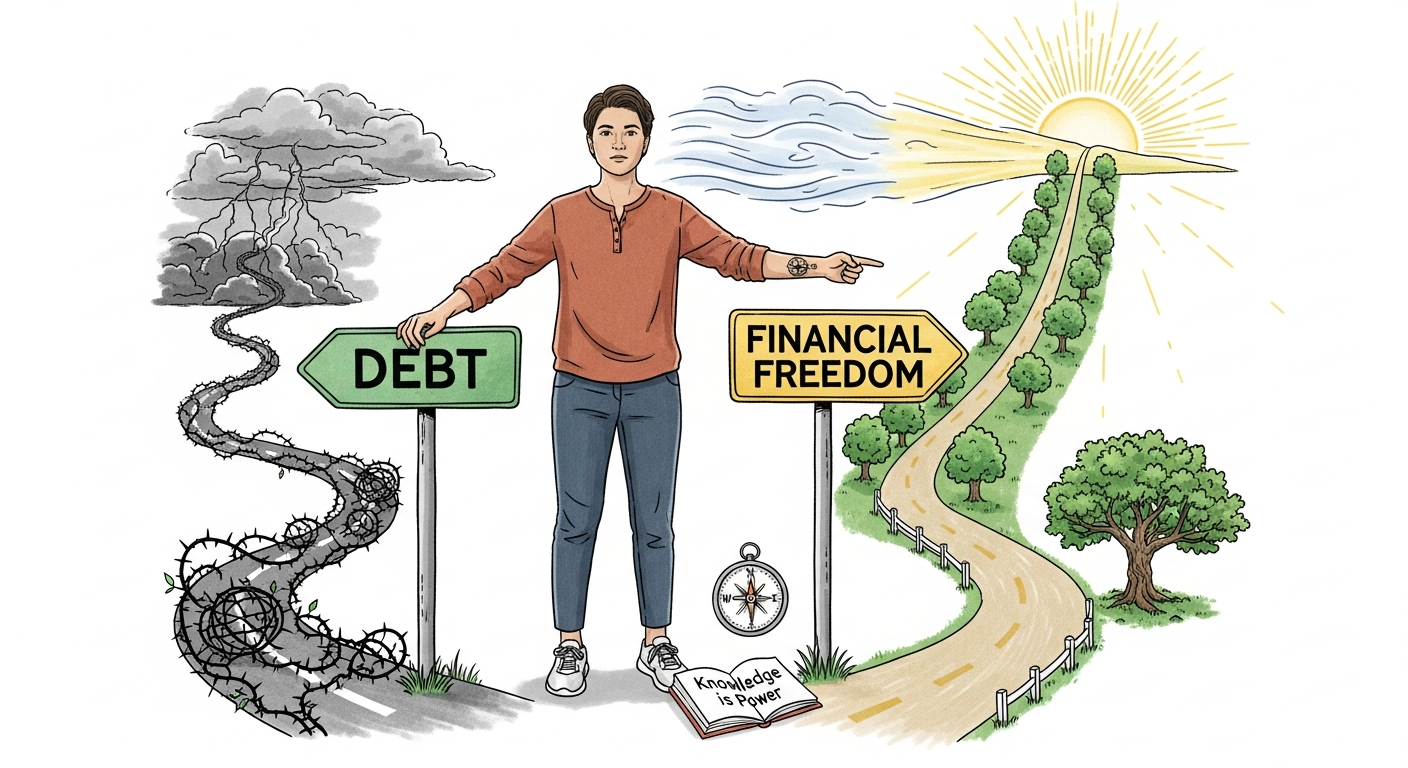
How to Stop Going Into Debt Every Month Tips That Actually Work
If you feel like you are drowning a little more each month, you are not alone. Millions of people watch their credit card balances climb, their savings shrink, and their stress grow because they cannot seem to stop adding new debt. The good news is that learning how to stop going into debt every month tips and strategies does not require a finance degree. It requires honesty, a simple plan, and the willingness to make changes starting today.
Why You Keep Going Deeper Into Debt Each Month
Before you can fix the problem, you need to understand what is driving it. Monthly debt accumulation rarely happens because of one big purchase. It usually comes from a pattern of small gaps between what you earn and what you spend.
Here are the most common reasons people slide further into debt every month:
- No written budget. Without a plan for your money, spending decisions happen on impulse rather than intention.
- Lifestyle inflation. As income rises, spending rises right along with it, leaving no extra room.
- Relying on credit cards as a safety net. When unexpected expenses pop up, plastic fills the gap because there is no emergency fund.
- Ignoring the real numbers. Many people avoid looking at their bank statements because the truth feels uncomfortable.
None of these reasons make you a bad person. They make you a normal person who needs a better system. Understanding your debt-to-income ratio, which is the percentage of your monthly income that goes toward debt payments, is a powerful first step. If you are not sure how to calculate yours, take a look at this guide on what a debt-to-income ratio is and why it matters.
The Foundation: Build a Budget That Stops the Bleeding
You cannot stop going into debt every month without a budget. I know that word makes some people cringe, but a budget is not a punishment. It is permission. It tells your money where to go so you stop wondering where it went.
Start With Your Actual Income
Write down exactly how much money hits your bank account each month after taxes. If your income varies from month to month, use the lowest amount you have earned in the past three months as your baseline. For more guidance on this, check out this post on how to budget on a variable income.
List Every Single Expense
Pull up your bank and credit card statements from the last 30 days. Categorize every transaction. Include rent or mortgage, utilities, groceries, gas, subscriptions, dining out, and everything else. Do not skip the small stuff. Those $5 and $10 charges add up fast.
Subtract and Face the Gap
If your expenses exceed your income, you have found the source of your monthly debt. That gap is the exact amount you are borrowing each month just to get by. Your entire focus needs to be on closing that gap, and the strategies below will show you how.
If you have never built a budget before, I walk through the entire process in how to create a monthly budget from scratch.
How to Stop Going Into Debt Every Month: Actionable Steps
Now that you have a clear picture of the gap, it is time to close it. These are practical, proven steps you can start using this week.
1. Cut Expenses That Do Not Serve You
Look at your expense list and circle anything that is not essential to your survival or well-being. Subscriptions you forgot about, premium streaming packages, gym memberships you never use. These are the first things to go. You might be surprised how much you can save by auditing your recurring charges. For a deeper dive, read this guide on how to cut your subscriptions and save hundreds.
2. Reduce Your Biggest Monthly Costs
Your largest expenses usually offer the largest savings opportunities. Here are a few places to look:
- Groceries. Meal planning, buying in season, and shopping with a list can easily save $100 to $200 per month.
- Utilities. Simple changes like adjusting your thermostat, switching to LED bulbs, and unplugging unused devices lower your bills.
- Transportation. Carpooling, consolidating errands, or refinancing a car loan at a lower rate can free up cash.
3. Stop Using Credit Cards for Daily Spending
This is one of the most important shifts you can make. If credit cards are fueling your monthly debt, remove them from your wallet and your online shopping accounts. Switch to a debit card or cash for everyday purchases. When you spend money you actually have, you cannot go into debt. Some people find the cash envelope system helpful because it creates a physical limit on spending in each category.
4. Build a Small Emergency Buffer
One of the biggest reasons people go into debt each month is that unexpected expenses force them to use credit. A flat tire, a doctor visit, or a broken appliance pushes them right back onto the credit card. Even a small emergency fund of $500 to $1,000 can break this cycle. Start by setting aside whatever you can, even if it is $25 per paycheck. Over time, work toward a full three-month cushion. You can learn exactly how in this post on how to build a three-month emergency fund.
5. Attack Existing Debt Strategically
While you are closing the monthly gap, you also need a plan to pay down the debt you have already accumulated. Two popular approaches are the debt snowball, where you pay off the smallest balance first for quick wins, and the debt avalanche, where you pay off the highest interest rate first to save the most money. Both work. The best one is the one you will actually stick with. For a full comparison, read debt avalanche vs debt snowball and which strategy wins.
6. Lower Your Interest Rates
High interest rates make debt grow faster, which makes it harder to stop the monthly cycle. Call your credit card companies and ask for a rate reduction. If you have good payment history, many will agree. You can also explore balance transfer options to consolidate high-interest debt onto a lower-rate card. Learn the full process in this guide on how to negotiate lower interest rates on debt.
7. Track Your Spending Weekly
Do not wait until the end of the month to check your numbers. Set a weekly check-in, even just 10 minutes, to review your spending against your budget. This keeps small problems from turning into big ones. When you catch yourself overspending in a category on week two, you still have time to adjust for the rest of the month.
The Biggest Mistake People Make When Trying to Stop Monthly Debt
Here is where I see so many people stumble. They try to change everything at once, go on an extreme financial diet, and then burn out within three weeks. They cut every joy out of their life, feel miserable, and then swing back to overspending out of frustration.
Sustainable change beats dramatic change every time. You do not need to eliminate all fun from your budget. You need to be intentional about how much you allocate to it. Give yourself a small, planned amount for things you enjoy. When it is part of the plan, it is not a problem.
The other common mistake is ignoring irregular expenses. Things like car registration, annual insurance premiums, holiday gifts, and back-to-school costs are predictable even though they do not happen every month. If you do not plan for them, they will blow up your budget and send you right back to the credit card. Setting up sinking funds, which are savings accounts designated for specific future expenses, solves this problem completely.
The Long-Term Payoff of Breaking the Debt Cycle
When you stop adding new debt each month, something powerful happens. Your existing debt starts shrinking instead of growing. Your stress levels drop. Your options expand. You begin to feel like you are in control of your money instead of the other way around.
Over time, the money that used to go toward interest payments and minimum balances starts working for you instead. You can build real savings, invest for your future, and make financial decisions from a place of confidence rather than fear.
Breaking the monthly debt cycle also improves your relationships. Money stress is one of the leading causes of conflict between partners. When you have a clear plan and are making progress, those conversations get a lot easier. You can move from arguing about money to dreaming together about what your financial future looks like.
This is not just about numbers on a spreadsheet. It is about the peace that comes from knowing you are no longer falling behind. Every month that you spend less than you earn is a month you move forward. And those months add up faster than you might expect.
You did not get into this situation overnight, and you will not get out of it overnight. But with a clear budget, intentional spending, a small emergency fund, and a strategy for your existing debt, you can absolutely stop the cycle. The fact that you are reading this right now tells me you are ready. Trust the process, take it one step at a time, and remember that every small win matters. You have what it takes to turn this around.