
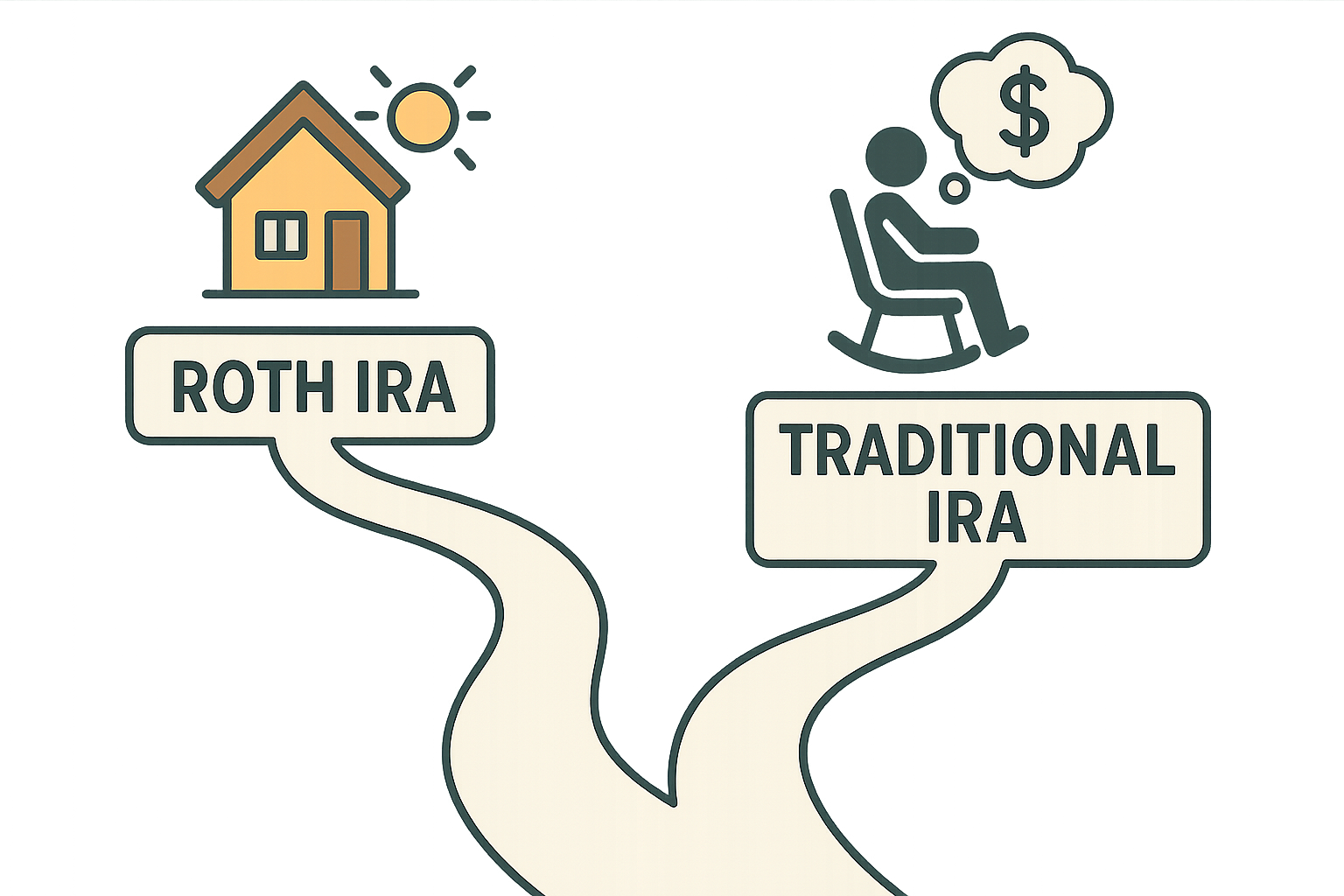
roth ira vs traditional ira which is better to choose
If you feel stuck trying to figure out roth ira vs traditional ira which is better to choose, you are not alone. Retirement accounts can sound complicated, especially when you are already trying to budget, pay off debt, and build savings. The good news is that this decision gets much easier when you focus on how each account affects your taxes today and in the future.
The real question behind Roth IRA vs Traditional IRA which is better to choose
Most people think this choice is about picking the “best” account. It is really about picking the account that fits your tax situation, your current cash flow, and your goals. Both a Roth IRA and a Traditional IRA can help you invest for retirement. The main difference is when you get the tax benefit.
With a Roth IRA, you contribute money after taxes. That means you do not get a tax break now, but your money can grow tax free, and qualified withdrawals in retirement are tax free.
With a Traditional IRA, you may be able to deduct your contribution on your taxes now. That can lower your taxable income today. But when you withdraw the money in retirement, you pay income tax on those withdrawals.
If you are trying to make room in your budget for investing, start by getting control of your monthly plan. Articles like How to Make a Budget That You’ll Actually Stick To and Zero-Based Budgeting: Give Every Dollar a Job can help you free up money to contribute consistently.
How these IRAs work, and what you need to know first
1. Know the tax timing
This is the core difference. A Roth IRA gives you tax free income later. A Traditional IRA may give you a tax deduction now. If you expect to be in a higher tax bracket in retirement, a Roth IRA often looks better. If you expect to be in a lower tax bracket later, a Traditional IRA may make more sense.
2. Understand contribution limits
Both account types have annual contribution limits set by the IRS. Those limits can change over time, so check the current year rules before contributing. If you are under age 50, you can contribute up to the standard limit. If you are 50 or older, you may be able to make an extra catch-up contribution.
3. Learn the income rules
Roth IRAs have income limits. If your income is too high, you may not be able to contribute directly. Traditional IRA contributions do not have income limits, but your ability to deduct them can be limited if you or your spouse has a retirement plan at work.
4. Know the withdrawal rules
Retirement accounts are meant for long-term savings. If you pull money out early, you could face taxes or penalties. Roth IRAs are more flexible because you can generally withdraw your contributions, not your earnings, without tax or penalty. Traditional IRAs usually have fewer flexible withdrawal options.
If you are just getting started with retirement investing, read Investing 101: How to Start With Just $100 and What Is an Index Fund and Why Every Beginner Needs One. Those basics make it easier to use either IRA well.
How to decide which IRA is better for you
If your income is tight right now, look closely at the Traditional IRA
If you need tax relief today, a Traditional IRA can help. A deductible contribution may lower your tax bill this year, which can free up cash for other goals. That can be helpful if you are working hard to stabilize your finances, build a starter emergency fund, or stop relying on credit cards.
For example, if you are barely getting ahead each month, a current tax deduction may matter more than future tax free withdrawals. If that sounds like you, first make sure you have a basic savings cushion. How to Build a 3-Month Emergency Fund is a smart next step before going all in on retirement investing.
If you are early in your career, a Roth IRA often wins
If you are younger or currently in a lower tax bracket, a Roth IRA is often a strong choice. You pay taxes at today’s lower rate, and then your future growth and qualified withdrawals are tax free. That can be powerful if your income is likely to rise over time.
This is especially useful if you have decades ahead for your money to grow. The longer your time horizon, the more valuable tax free growth can become.
If you want more flexibility, the Roth IRA has an edge
A Roth IRA can feel less risky if you worry about locking up your money. Since you can usually withdraw your original contributions without tax or penalty, many people feel more comfortable starting there. You still should not treat retirement savings like a regular checking account, but the flexibility helps some people begin.
If you are carrying high-interest debt, slow down before investing heavily
If you have credit card debt with a high interest rate, paying that off may give you a better short-term return than investing. A 24 percent credit card rate can wipe out your progress fast. In that case, you may want to contribute enough to get any employer match in a workplace plan, then focus on debt payoff before maxing out an IRA.
If debt is part of your reality, read How to Pay Off Credit Card Debt Fast and Debt Avalanche vs Debt Snowball: Which Strategy Wins?. Clearing expensive debt can put you in a much stronger position to invest with confidence.
A simple shortcut if you feel overwhelmed
If you want a quick rule of thumb, use this:
- Choose Roth IRA if your income is modest now, you expect income growth, or you value tax free retirement withdrawals.
- Choose Traditional IRA if you want a tax break now and expect to be in a lower tax bracket later.
- Choose either one only after you have a plan for your budget, essential bills, and high-interest debt.
The most common mistakes people make with IRAs
The biggest mistake is obsessing over which IRA is perfect, then doing nothing. An okay account funded consistently is better than the perfect account you never open.
Another common mistake is investing before you have any emergency savings. If every surprise expense goes on a credit card, your retirement progress can get undone fast. A small safety net protects the money goals that matter most.
People also forget that choosing the IRA is only step one. You still have to choose investments inside the account. If you open an IRA and leave the money sitting in cash, it may not grow the way you expect. For many beginners, simple diversified index funds are a practical place to start.
Finally, some people contribute to a Roth IRA without checking the income rules, or assume a Traditional IRA contribution is fully deductible when it is not. That can create tax headaches later. Always double-check eligibility and deduction rules for the year you contribute.
If you struggle with following through financially, building better systems matters. How to Track Your Spending Without Feeling Overwhelmed can help you stay consistent without making money management feel like a second job.
Why this choice matters for your long-term financial freedom
Choosing between a Roth IRA and a Traditional IRA is not just about taxes. It is about building a future where you have more options, less stress, and more control over your life. Retirement savings give your future self breathing room. They help you avoid working forever, relying on debt, or feeling trapped by every money decision.
That is why the best IRA is the one that fits your life now and helps you keep going. If a Traditional IRA gives you needed tax relief, use it. If a Roth IRA gives you long-term tax free growth and peace of mind, use that. What matters most is steady progress.
You do not need to invest huge amounts to start. Even small monthly contributions count. If you save $50, $100, or $200 a month and keep increasing it when your finances improve, you build momentum. That momentum matters more than trying to time the market or make the perfect choice on day one.
And if saving feels hard right now, do not ignore that reality. Tight budgets need practical fixes first. You may benefit from trimming expenses with ideas from How to Save Money on Groceries Every Week or building a small cushion with 52-Week Savings Challenge: Save $1,378 This Year. The more stable your day-to-day money is, the easier it becomes to invest for tomorrow.
Here is the bottom line. If you are asking roth ira vs traditional ira which is better to choose, start with your tax situation, your current budget, and whether you need flexibility or immediate tax savings. Then choose one and begin. You do not need to have everything figured out to make a smart move. You just need to take the next practical step and stay consistent.