
How Compound Interest Works and Why It Matters for Wealth
If you have ever felt like saving money is too slow to make a real difference, you are not alone. Understanding how compound interest works and why it matters for wealth can completely change how you see saving, investing, and long-term financial progress, because it shows you how small, steady actions can grow into something meaningful.
The core problem, most people underestimate time
A lot of people think building wealth requires a big income, perfect timing, or expert investing skills. In reality, one of the biggest reasons people fall behind is much simpler, they wait too long to start. Compound interest rewards consistency and time, not perfection.
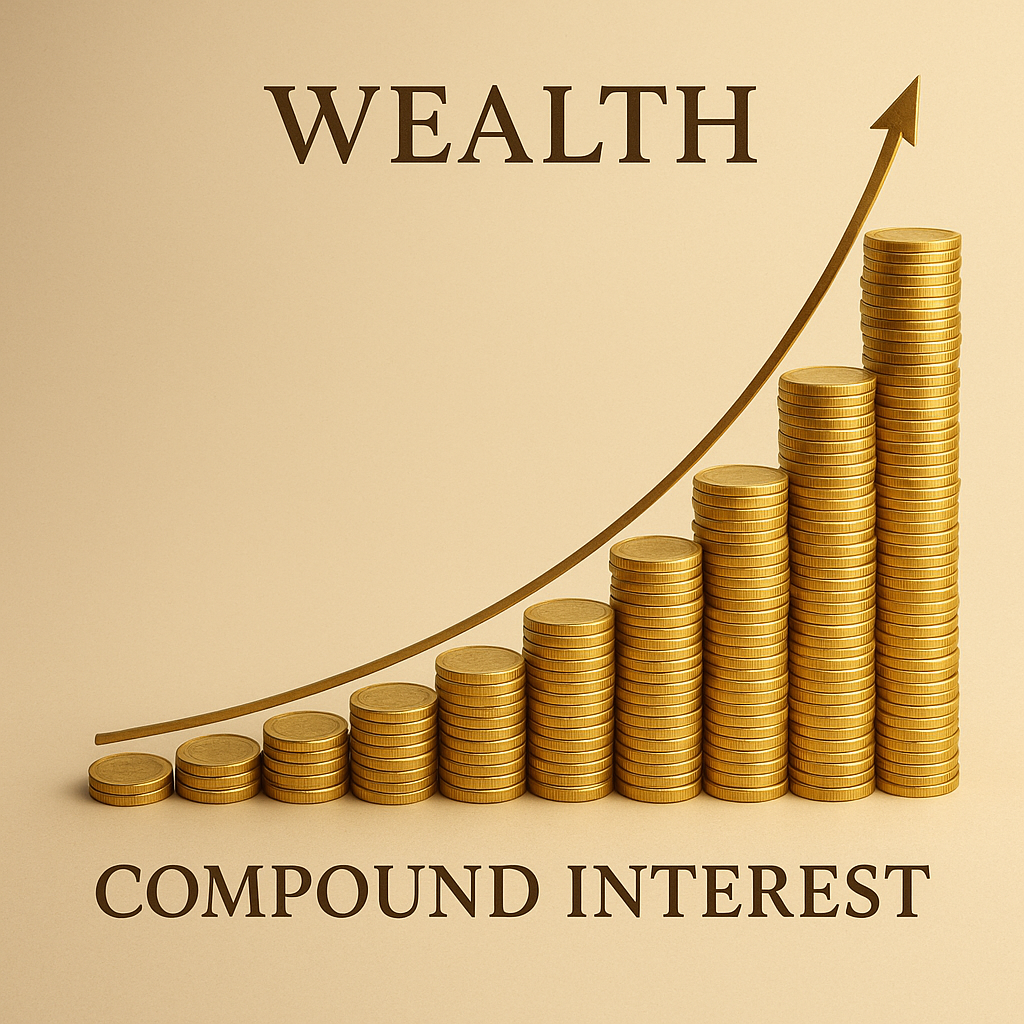
Compound interest means you earn interest not only on the money you put in, but also on the interest that money has already earned. That creates a snowball effect. At first, the growth looks small. Then it starts picking up speed. Over enough years, that growth can become powerful.
This matters whether you are trying to build an emergency fund, save for retirement, or invest for your future. If you are still trying to get control of your day-to-day money, start with the basics first. Resources like How to Make a Budget That You’ll Actually Stick To and How to Track Your Spending Without Feeling Overwhelmed can help you free up the cash you need to begin.
How compound interest works and why it matters for wealth
Let’s make this simple. When your money earns interest, that interest gets added to your balance. Then the next time interest is calculated, it is based on your new, larger balance. That is the compounding part.
Simple interest versus compound interest
Simple interest is earned only on your original deposit. Compound interest is earned on your original deposit plus the interest already added. That difference may seem small at first, but over years it becomes huge.
For example, if you invest $1,000 and earn 8 percent a year:
- With simple interest, you would earn $80 each year.
- With compound interest, you would earn interest on the growing balance, so each year the dollar amount increases.
What makes compounding stronger
There are three main factors that drive compounding:
- Time, the longer your money stays invested, the more growth cycles it gets.
- Rate of return, this is the percentage your money earns each year.
- Regular contributions, adding money consistently gives compounding more to work with.
Here is a simple example. If you invest $200 a month for 30 years and earn an average annual return of 8 percent, you would contribute $72,000 total. But your account could grow to around $300,000 or more. The difference is not just your money, it is the money your money earned.
That is why getting started matters more than getting fancy. If you are new to investing, Investing 101: How to Start With Just $100 is a great next step, and if you want a simple investment option, read What Is an Index Fund and Why Every Beginner Needs One.
Practical steps you can take right now
You do not need a perfect financial situation to benefit from compound interest. You just need a plan and a place to begin.
1. Start before you feel ready
Many people delay saving or investing because they think they need more money first. But the earlier you start, the less pressure you put on yourself later. Even a small amount invested now can do more work than a larger amount invested years from now.
If all you can manage is $25 or $50 a month, begin there. Your first goal is to build the habit. Once the habit is in place, you can increase the amount over time.
2. Automate your contributions
Automation removes willpower from the process. Set up an automatic transfer to savings or an investment account right after payday. That way, you are paying your future self first.
If your income is tight, look for easy ways to create breathing room. Cutting recurring expenses can help. Articles like How to Cut Your Subscriptions and Save Hundreds and How to Save Money on Groceries Every Week can help you find money to redirect toward savings.
3. Use the right account for the right goal
Compound interest can work in different accounts, but the best place depends on your goal.
- For short-term savings, a high-yield savings account may be a good fit. It usually pays more interest than a standard savings account.
- For retirement, tax-advantaged accounts like IRAs can help your money grow more efficiently.
- For long-term investing, broad market funds are often a simple way to stay diversified, which means spreading your money across many investments to reduce risk.
If you are comparing retirement accounts, Roth IRA vs Traditional IRA: Which Is Better for You? can help you understand the tradeoffs.
4. Protect your progress from high-interest debt
This part is important. Compound interest can help you build wealth, but it can also work against you when you carry debt, especially credit card debt. If your credit card charges 24 percent interest, that debt can grow quickly and cancel out the gains you are trying to make elsewhere.
If you are carrying balances, paying them down may be the smartest first move. Read How to Pay Off Credit Card Debt Fast for a practical plan. You can still save a small emergency buffer at the same time, but high-interest debt should not be ignored.
5. Leave your money alone
Compounding needs time. Pulling money out too often interrupts growth. Checking your balance every day can also create unnecessary stress. Focus on the long game. Make your deposits, review your plan a few times a year, and avoid panic decisions based on short-term market moves.
A common mistake, expecting fast results
One of the biggest misconceptions about compounding is that it should feel exciting right away. Most of the time, it does not. In the early years, progress looks slow because the interest earned is still being calculated on a relatively small balance.
That slow start causes some people to quit. They think, “This is not doing much.” But this is exactly where patience matters. The real power of compounding shows up later, after years of regular contributions and reinvested earnings.
Another mistake is trying to chase high returns instead of building steady habits. You do not need risky bets to benefit from compound growth. You need regular contributions, reasonable returns, and enough time for the math to work.
If budgeting feels messy and that is making it hard to stay consistent, simplify your system. A structure like Zero-Based Budgeting: Give Every Dollar a Job can help you direct more money toward your future without feeling scattered.
The long-term payoff is bigger than just money
When you understand how compound interest works, your mindset begins to change. You stop seeing small contributions as pointless. You start seeing them as seeds. Every deposit becomes a decision that supports your future peace of mind.
This is why how compound interest works and why it matters for wealth is not just an investing lesson. It is a life lesson. It teaches you that steady effort counts, that time is valuable, and that your future can improve with simple actions repeated over and over.
The long-term benefits go beyond a bigger account balance:
- Less stress, because you know your money is growing in the background.
- More options, because savings and investments create flexibility.
- Greater confidence, because you are no longer just reacting to money problems.
- Real momentum, because small wins start stacking up.
If you are also building your safety net, pairing compounding with strong savings habits is a smart move. A solid cash reserve keeps you from dipping into investments when life gets hard. Building that cushion first or alongside investing can make your whole plan more stable.
The most important thing to remember is this, wealth is often built quietly. It grows through habits that seem ordinary, monthly deposits, fewer impulse purchases, a clear budget, lower debt, and patience. None of that is flashy, but it works.
You do not need to have everything figured out today. You just need to take the next step. Start small, stay consistent, and give your money time to grow. Compound interest is powerful because it rewards faithful action, and that means your progress can become much bigger than it looks right now.