
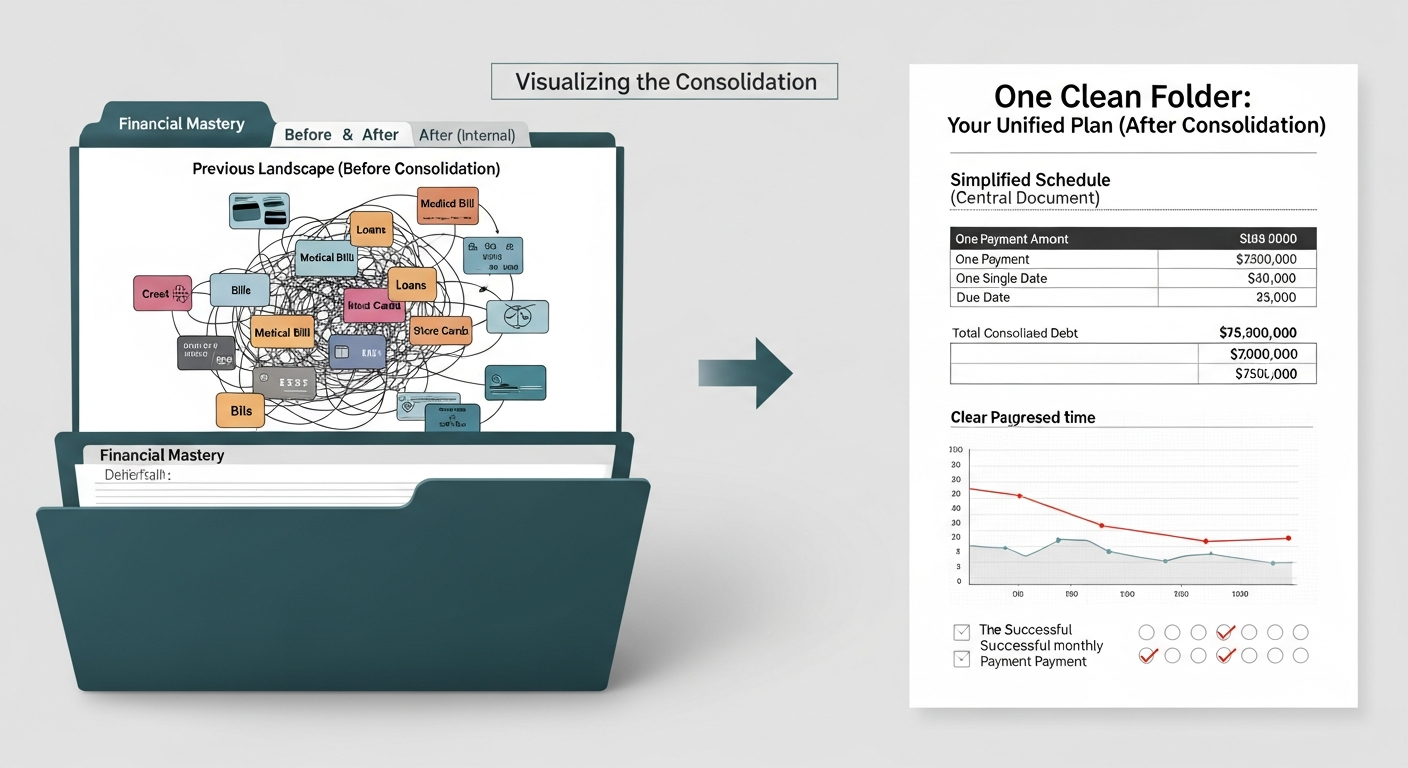
Debt Consolidation Pros and Cons: Is It Worth It?
If you are juggling multiple debt payments every month, you know how exhausting it can be. Between credit cards, medical bills, student loans, and other balances, it can feel like you are running on a treadmill that never stops. Understanding the debt consolidation pros and cons and is it worth it for your unique situation is the first step toward making a smart, informed decision that actually moves you closer to financial freedom.
Let me walk you through exactly what debt consolidation is, when it makes sense, when it does not, and how to decide if it is the right tool for your financial journey.
Why Multiple Debts Feel So Overwhelming
Here is the reality. When you owe money to four, five, or even ten different creditors, your financial life becomes incredibly complicated. You have different due dates, different interest rates, different minimum payments, and different customer service portals. It is a recipe for missed payments, late fees, and constant stress.
The emotional weight of carrying multiple debts is real. You may feel like no matter how much you pay, the balances barely move. If you are living paycheck to paycheck, even one unexpected expense can throw everything off. If that sounds familiar, you might find it helpful to read about how to budget when you’re living paycheck to paycheck to get some immediate relief.
This is exactly why debt consolidation sounds so appealing. The idea of turning chaos into one simple payment is powerful. But before you jump in, you need to understand what you are actually signing up for.
What Is Debt Consolidation and How Does It Work?
Debt consolidation is the process of combining multiple debts into a single loan or payment. Instead of paying five different creditors each month, you take out one new loan, use it to pay off all your existing debts, and then make one monthly payment on the new loan.
There are several common ways to consolidate debt:
- Personal consolidation loan. You borrow a fixed amount from a bank, credit union, or online lender and use it to pay off your other debts. You then repay the new loan in fixed monthly installments over a set period, typically two to seven years.
- Balance transfer credit card. You move existing credit card balances onto a new card that offers a low or zero percent introductory interest rate. This can save you a lot in interest if you pay off the balance before the promotional period ends. Learn more about this approach in my post on whether you should use a balance transfer to pay off debt.
- Home equity loan or line of credit. You borrow against the equity in your home to pay off unsecured debts. This often comes with a lower interest rate, but your home becomes collateral.
- Debt management plan. A nonprofit credit counseling agency negotiates lower interest rates with your creditors and sets up one monthly payment that they distribute on your behalf.
Each method has different requirements, risks, and benefits. The right choice depends on your credit score, the total amount of debt you carry, and your ability to commit to a repayment plan.
Weighing the Debt Consolidation Pros and Cons: Is It Worth It for You?
The Real Advantages of Consolidating Debt
When done correctly, debt consolidation can genuinely transform your financial situation. Here are the key benefits:
- One monthly payment. Instead of tracking multiple due dates and amounts, you make a single payment. This drastically reduces the chance of missing a payment and getting hit with late fees.
- Lower interest rate. If your consolidation loan carries a lower rate than your current debts, you will pay less in interest over the life of the loan. This is especially impactful for high-interest credit card debt. If you want to explore other ways to reduce what you are paying in interest, check out how to negotiate lower interest rates on debt.
- A clear payoff date. Many consolidation loans come with a fixed repayment term. You know exactly when you will be debt-free, which provides motivation and a finish line to work toward.
- Potential credit score improvement. By paying off revolving credit card balances with an installment loan, you can lower your credit utilization ratio, which is a major factor in your credit score.
The Drawbacks You Cannot Ignore
Debt consolidation is not a magic fix. There are real risks you need to be honest about before moving forward:
- You might pay more overall. If you extend your repayment period, your monthly payment may drop, but the total interest paid over the life of the loan could be higher. Always calculate the total cost, not just the monthly payment.
- It does not fix the root problem. If overspending or a lack of budgeting caused your debt, consolidation alone will not solve it. Without changing your habits, you could end up right back where you started, or worse, with new debt on top of the consolidation loan.
- Fees can add up. Origination fees, balance transfer fees, and closing costs can eat into your savings. A three percent balance transfer fee on $10,000 is $300 before you even start paying down the balance.
- Risk of losing collateral. If you use a home equity loan and cannot make payments, you could lose your home. The stakes are much higher when you secure unsecured debt against a major asset.
Understanding your debt-to-income ratio is critical when evaluating whether consolidation is realistic for you. I break this down in detail in my guide on what a debt-to-income ratio is and why it matters.
The Biggest Mistake People Make with Debt Consolidation
Here is the mistake I see over and over again. Someone consolidates all their credit card debt into one loan, feels a wave of relief, and then starts using those now-empty credit cards again. Within a year or two, they have the consolidation loan payment plus a fresh pile of credit card debt. They are now in a worse position than before.
Debt consolidation is a tool, not a solution. The solution is a change in behavior. You need a budget that works for your real life, a plan to stop going into debt every month, and the discipline to stick with it.
Before you consolidate, commit to these steps:
- Build a monthly budget and track every dollar. If you are not sure where to start, my post on how to create a monthly budget from scratch walks you through it step by step.
- Stop using credit cards for daily spending. Switch to cash or a debit card until your habits are firmly in place.
- Start a small emergency fund. Even $500 to $1,000 set aside can prevent you from reaching for a credit card when something unexpected happens.
- Choose a debt repayment strategy you can stick with. Whether you prefer the snowball method or the avalanche method, having a clear plan matters. Learn the differences in my comparison of debt avalanche vs. debt snowball strategies.
If you consolidate without addressing these fundamentals, you are putting a bandage on a wound that needs stitches.
The Bigger Picture: What Debt Consolidation Can Do for Your Future
When you combine debt consolidation with a solid financial plan, the results can be life-changing. Here is what becomes possible when you get this right.
First, your monthly cash flow improves. With a single, potentially lower payment, you free up money that can go toward savings, an emergency fund, or even investing for retirement. Every dollar you redirect from interest payments to your own future is a dollar working for you instead of against you.
Second, your stress levels drop significantly. Financial anxiety affects your sleep, your relationships, and your health. Knowing that you have one payment, one due date, and a clear payoff date brings a level of peace that is hard to put a price on.
Third, you build momentum. Paying off debt is as much a psychological game as it is a mathematical one. When you see your consolidation loan balance dropping month after month, it fuels your motivation to keep going. That momentum can carry you all the way to becoming completely debt-free.
Finally, you position yourself for bigger financial goals. Whether that means buying a home, saving for your children’s education, or building wealth for retirement, getting out of debt is the foundation everything else is built on. It is hard to grow your money when most of it is going to pay off yesterday’s purchases.
Think about what your life would look like without those debt payments. Think about what you could do with that money every single month. That is the real reward waiting for you on the other side of a smart consolidation decision combined with lasting financial habits.
How to Decide If Consolidation Is Right for You
Ask yourself these questions honestly:
- Will the new interest rate be lower than what I am currently paying on most of my debts?
- Can I afford the new monthly payment comfortably without taking on additional debt?
- Am I willing to stop using credit cards and commit to a budget?
- Have I calculated the total cost of the consolidation loan, including all fees, compared to my current debts?
- Do I have a plan to build an emergency fund so I do not fall back into debt?
If you answered yes to all of these, consolidation could be a smart move for you. If you hesitated on any of them, take time to address those areas first. The last thing you want is to consolidate prematurely and end up deeper in the hole.
Debt consolidation can be a powerful step toward financial freedom, but only when it is part of a bigger plan. It works best when you pair it with a realistic budget, a commitment to changing spending habits, and a clear vision of the life you want to build. You have the ability to take control of your money. Start by understanding your options, make a plan, and take that first step today. Your future self will thank you.