
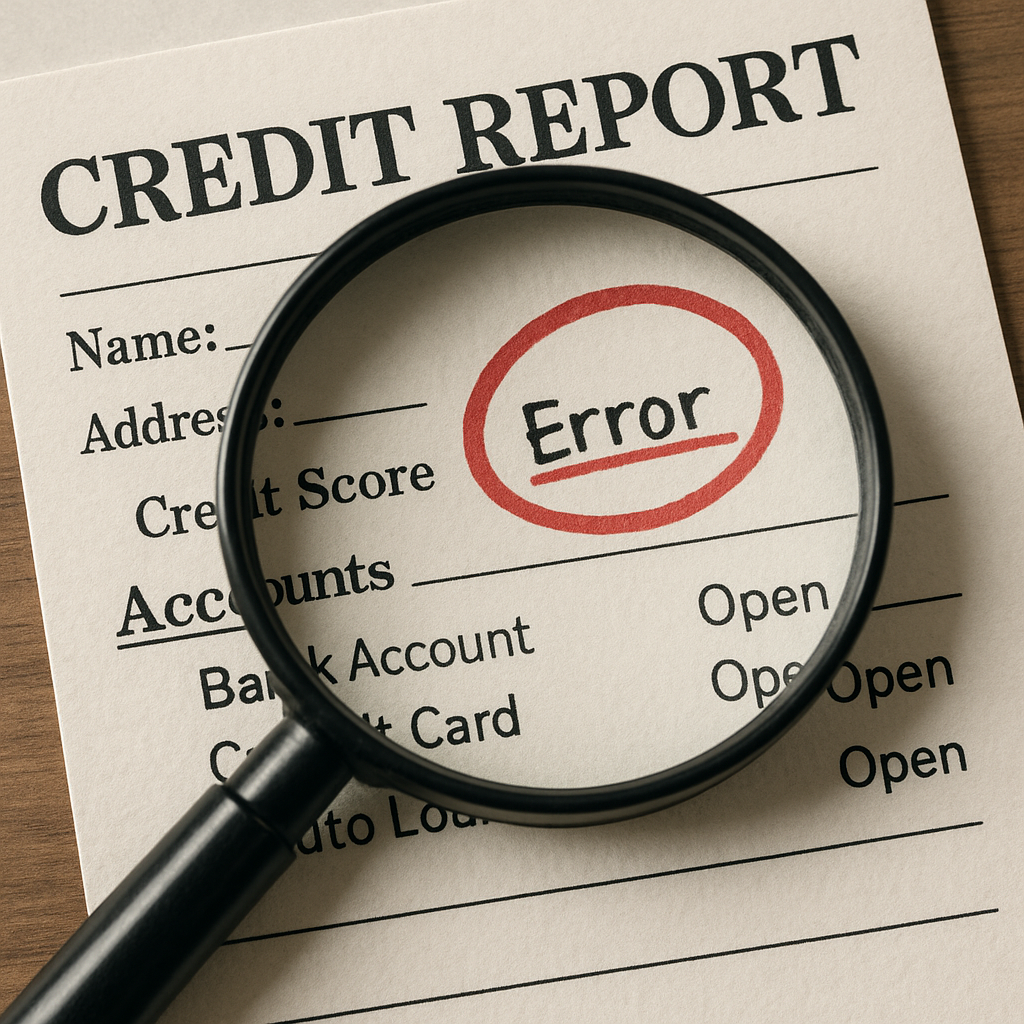
How to Dispute Errors on Credit Report Step by Step
If your credit report has mistakes, you can feel stuck, frustrated, and unsure what to do next. The good news is that learning how to dispute errors on credit report step by step is not as complicated as it sounds, and taking action can protect your credit score, lower stress, and open better financial options.
The problem with credit report errors
Your credit report affects more than just loan approvals. It can influence the interest rate you pay, whether you qualify for a credit card, and sometimes even rental applications. When wrong information shows up, it can hurt you in real ways.
Common credit report errors include:
- Accounts that are not yours, often caused by mixed files or identity theft.
- Wrong payment history, such as a late payment listed even though you paid on time.
- Incorrect balances, especially if a lender failed to update your account.
- Duplicate accounts, which can make your debt look larger than it is.
- Outdated negative items, like debts that should have been removed after the reporting time limit.
If you are trying to improve your credit, this is one of the first things to check. A higher score is easier to build on a clean foundation. If you want more context on score ranges, read What Is a Good Credit Score and How to Get One. If you are also focused on faster credit improvement, How to Raise Your Credit Score 100 Points Fast can help you prioritize your next moves.
How to dispute errors on credit report step by step
Before you send a dispute, you need a simple plan. A dispute is a formal request asking a credit bureau or lender to investigate information you believe is wrong. The three major credit bureaus are Equifax, Experian, and TransUnion. You may need to dispute the same error with each one if it appears on all three reports.
Step 1: Get all three credit reports
Start by pulling your reports from all three bureaus. Do not assume they all contain the same information. One bureau may show an error that the others do not. Go line by line and review:
- Your name, address, and Social Security number
- Open and closed accounts
- Payment history
- Collections accounts
- Public records
- Hard inquiries, which are credit checks tied to applications
Step 2: Mark each error clearly
Create a short list of every item that looks wrong. Be specific. Instead of writing “credit card account is wrong,” write “ABC Bank account ending in 4321 shows 60 days late in March, but payment was made on time.”
This small step matters because a clear dispute is easier to investigate than a vague complaint.
Step 3: Gather proof
Collect any documents that support your claim. Useful records include bank statements, billing statements, payment confirmations, canceled checks, settlement letters, and identity theft reports if someone opened accounts in your name.
Keep copies of everything. Never mail your only original documents.
Step 4: Send your dispute to the credit bureau
You can usually dispute online, by mail, or by phone, but written disputes are often the strongest option because they create a paper trail. In your letter, include:
- Your full name and current address
- A copy of your ID and proof of address if required
- The account name and number connected to the error
- A clear explanation of what is wrong
- A request to correct or remove the inaccurate information
- Copies of supporting documents
Send the letter by certified mail if possible so you have proof it was received.
Step 5: Dispute with the furnisher too
The furnisher is the company that supplied the information, such as a bank, credit card issuer, or collection agency. You can dispute directly with them as well. This can speed things up, especially if the issue is coming from a lender that failed to update your account correctly.
If a collector is involved, it is smart to understand your rights first. Read How to Talk to a Debt Collector Without Getting Scammed so you know how to respond carefully and confidently.
Step 6: Wait for the investigation
Credit bureaus usually have about 30 days to investigate. They contact the furnisher, review the evidence, and then send you the result. If the information cannot be verified, it should be removed or corrected.
During this time, keep a simple folder with dates, copies, and notes. Staying organized helps if you need to follow up.
Step 7: Review the results and follow up
Once the investigation is complete, read the response carefully. If the bureau corrects the error, check your updated report to make sure the change actually appears. If they reject your dispute and you still believe the item is wrong, you can:
- Send more documentation and dispute again
- Dispute directly with the furnisher if you have not done that yet
- Add a brief statement of dispute to your report
- File a complaint with the Consumer Financial Protection Bureau
Action steps that make the process easier
Knowing the steps is helpful, but taking the right actions in the right order makes the process less overwhelming. Here are practical ways to stay on track.
Create a simple dispute checklist
Write down each error, which bureau shows it, what proof you have, when you mailed the dispute, and when you expect a response. A one-page checklist keeps things from slipping through the cracks.
Focus on the errors that hurt your score the most
If you feel overwhelmed, start with the items that likely cause the biggest damage. These often include late payments, collections accounts, charge-offs, and high balances that should have been updated. If revolving balances are part of the problem, review How Credit Utilization Affects Your Score to understand why your card balances matter so much.
Do not confuse negative information with inaccurate information
You can dispute mistakes, but you cannot remove accurate negative items just because you do not like them. For example, if you really missed payments, the bureau will likely keep that information. That is why honesty with yourself matters here. Clean up what is wrong, then make a plan for what is true.
If credit card debt is part of the issue, you may also benefit from reading How to Pay Off Credit Card Debt Fast and Debt Avalanche vs Debt Snowball: Which Strategy Wins?.
Watch your budget while you repair your credit
Credit repair works best when you stop new problems from showing up. That means paying current bills on time, avoiding unnecessary applications, and building room in your monthly plan. If money is tight, use How to Budget When You’re Living Paycheck to Paycheck and How to Make a Budget That You’ll Actually Stick To to steady your finances while you work through disputes.
Quick tip: If you are trying to rebuild after errors or past credit mistakes, one tool that may help is a secured card. Learn the basics in Secured Credit Cards: The Best Way to Build Credit.
Common mistakes people make when disputing credit report errors
A lot of people give up too early, or they make simple mistakes that slow everything down. Avoid these problems if you want a smoother result.
Sending disputes without proof
A short complaint with no documents is weaker than a clear letter backed by records. Even one billing statement or payment confirmation can make a difference.
Disputing everything at once without organization
If your report has several errors, you can absolutely challenge them, but keep each one easy to understand. A messy dispute package can create confusion and delays.
Ignoring mail from the bureaus or furnishers
Open every letter and read every email connected to your case. Sometimes the bureau asks for more information. If you miss that request, your dispute can stall.
Paying for services before trying yourself
You have the right to dispute errors on your own for free. Many people can handle the process themselves with basic organization and persistence. Save your money unless your case is unusually complicated.
Not checking your reports again
Even after a correction, keep monitoring your credit. Errors can reappear, especially if the source data was not updated properly. A follow-up check helps you catch that quickly.
The bigger payoff of fixing your credit report
Disputing errors is not just about a number on a screen. It is about giving yourself a fair shot. A cleaner report can lead to lower rates, easier approvals, and less stress every time your credit gets reviewed.
It can also help you build momentum. When you see one problem get fixed, it becomes easier to tackle the next one. Maybe that means paying down debt, building savings, or finally getting consistent with your budget. Small wins count, especially when money has felt heavy for a long time.
If you are carrying too many debt payments while trying to improve your credit, understanding your full financial picture matters. Articles like What Is a Debt-to-Income Ratio and Why Does It Matter? can help you see how lenders evaluate affordability and where to focus next.
The main thing to remember is this, you do not need to fix everything in one day. Start with one report, one error, and one letter. When you follow how to dispute errors on credit report step by step, you move from feeling powerless to taking control, and that is exactly how lasting financial progress begins.